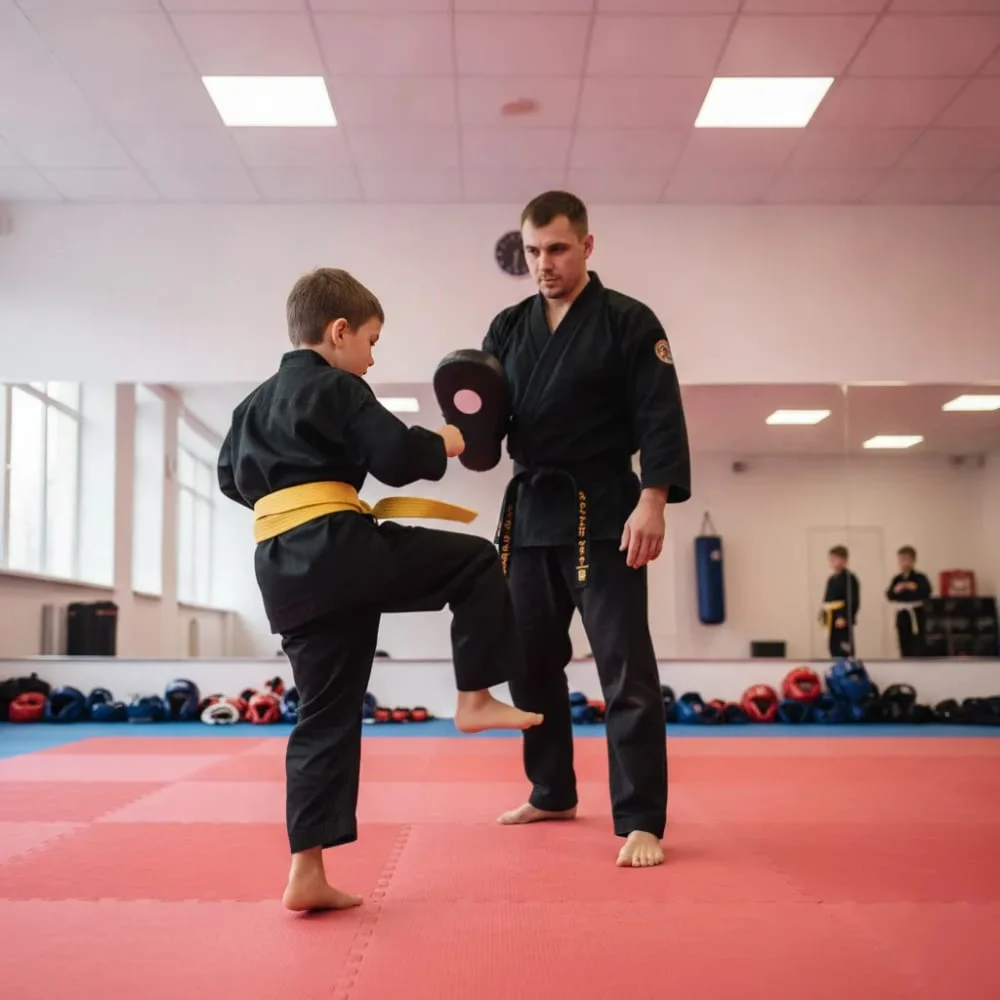
Martial Arts Tryout Class in El Cajon: See Exactly What to Expect
★★★★★ Trusted by 500+ El Cajon Martial Arts Families
A tryout class isn’t a demo. At James Martial Arts Academy in El Cajon, it runs on the same four-step method every student trains under once enrolled, Assess, Build, Challenge, Grow, so you’re watching the real thing, not a sales pitch dressed as a class. Here’s exactly what a first visit looks like, for every age from preschool through adult.
The Four-Step Tryout Process Behind Every First Class
Quick SummaryEvery Martial Arts Tryout Class follows the same four-step method we use in regular training: Assess, Build, Challenge, Grow. You watch your student get evaluated, taught, tested, and encouraged, all in one visit, so you see exactly how real classes run before you sign up for anything.
We don’t wing it. A tryout class isn’t a demo. It runs on the same four-step method every student trains under once enrolled. This means you’re not watching a sales pitch dressed as a class. You’re watching the real thing.
Assess: The instructor watches how your student moves, listens, and follows direction. This tells us their starting point.
Build: Basic stance work, a strike or block, something small enough to succeed at fast. Confidence starts here, in the first ten minutes.
Challenge: A light drill or partner exercise that pushes just past comfortable. This is the moment a nervous kid’s face changes.
Grow: The instructor gives direct, specific feedback, not generic praise. You know what your student can build on.
This same four-step approach carries through every belt and every age group we teach. The tryout isn’t a preview, it’s a fair sample. What you see in that one class is what your student will keep experiencing, week after week, as skills stack.
How a Tryout Class Looks Different for Every Age Group
A three-year-old and a thirteen-year-old don’t belong on the same mat doing the same drills. We don’t put them there, not even for a tryout.
Preschool Martial Arts tryouts run short and playful, built around listening games and simple stances. A four-year-old’s attention span won’t survive a long lecture. Kids Martial Arts tryouts add real technique, partner drills, and a little friendly challenge. Preteen Martial Arts and Teen Martial Arts sessions push harder, testing focus and physical effort the way an actual weekly class would. Beginner Martial Arts for Adults tryouts feel more like a conversation on the mat. We talk through goals first, then move into basic Kajukenbo footwork so you can feel it in your body, not just hear about it.
Preschool Martial Arts, ages 3 to 5: short blocks, big encouragement, simple listening drills
Kids Martial Arts, ages 6 to 9: basic strikes, blocks, and partner work with real correction
Women’s Self-Defense: situational drills built around real-world scenarios, not sport moves
If you want the full breakdown of every program we teach year round, our programs page lays it out age by age.
When to Wait Before Booking a Tryout Class
Not every week is the right week for a tryout class. If your child just started a new school year and is overwhelmed, or if you’re personally dealing with an injury that hasn’t cleared, wait. A tryout class asks a student to focus, follow instructions, and try something physically new. That’s hard to do well when someone’s exhausted or distracted.
We see this every week. A parent calls excited, but their child has a fever, or just had a rough week at school, or is recovering from a sprained ankle from soccer. Come in on a day when your child, or you, can show up present.
Recent injury or illness that hasn’t fully healed, for a child or an adult signing up for Beginner Martial Arts for Adults
A child under three, before Preschool Martial Arts age range even applies
Expecting a fast belt or trophy instead of steady skill building through Kajukenbo or Kosho-Ryu training
Looking only for weight loss or sport competition, not character and self-defense
A schedule so packed that one class a week feels like a burden, not a benefit
If your goal is trophies and fast belts, that’s not what happens here. Our academy builds discipline and practical self-defense, not sport medals. That mismatch shows up fast in a tryout class. It’s better to know before you start than after.
So wait if today isn’t the day. But don’t wait forever. Kids and adults both lose momentum the longer they put off trying. When you’re ready, we’ll be on the mat.
Call (833) 894-0191 · James Martial Arts Academy is ready to help
What to Bring and How Parents Can Prepare for the First Visit
Parents ask us this every week: what does my kid need to bring? Not much. That’s the honest answer. Your Martial Arts Tryout Class is built to meet a student exactly where they are, no gear required on day one.
Comfortable clothes that allow full movement, like a t-shirt and athletic pants or shorts
A water bottle, classes move and kids get thirsty fast
Hair tied back if it’s long, so it doesn’t get in the way during drills
A small notebook or phone if you want to jot down questions for the instructor afterward
An open mind, that’s the biggest thing we ask for
Show up ten minutes early on your first visit. It gives you time to fill out a quick form. It also lets your child watch part of a class before joining in. Nervous kids do better when they’ve seen the room first. We’ve watched this play out hundreds of times.
Our instructors use a four-step approach: Assess, Build, Challenge, Grow. It starts the moment your student steps on the mat. During the tryout, we assess where they’re at right now, not where a belt chart says they should be. So there’s no need to practice moves at home beforehand or worry about looking unprepared. You’re not being tested against other kids. You’re being met where you stand.
One more thing. If your child has any physical limitations or you’re exploring our Martial Arts for Special Needs option, mention it when you arrive. It helps the instructor adjust pacing right from the first minute. This means no awkward mid-class surprises for anyone.
Watch Our Video
See How We Handle a Martial Arts Tryout Class in El Cajon
How Trial and Tuition Pricing Works at Martial Arts Schools
Martial arts tuition isn’t one flat number across the industry. Most schools price by age group, class frequency, and how much one-on-one coaching a student gets. A preschool program meeting once or twice a week costs differently than a teen or adult program training several nights a week with sparring gear and belt testing built in. That’s normal, not a red flag.
A trial class exists so you can see the training before any tuition conversation happens at all. You watch how instructors talk to kids, how discipline gets taught, whether your child wants to come back next week. Most parents already know the answer by the time class ends.
Class frequency: two classes a week costs less than unlimited access
Age and program level: preschool programs run shorter sessions than teen or adult training
Group versus private lessons: private coaching runs higher because it’s one-on-one time
Uniform, belt testing, and equipment: some schools bundle these, some bill separately
Contract length: month-to-month flexibility works differently than a longer commitment
Before you sign anything, ask what’s included each month. Ask if testing fees are separate. Ask how long a typical contract runs, and what happens if your kid needs to pause for a season. A good school answers these plainly, no dancing around it.
We walk every family through this before they commit to tuition. That’s just how it should work.
Questions Families Ask About the Martial Arts Tryout Class
Frequently Asked Questions
What should my child bring to their first tryout class?
Your child just needs comfortable clothes they can move in, like a t-shirt and athletic pants, plus a water bottle. Long hair should be tied back so it stays out of the way during drills. No gear is required on day one. We suggest arriving ten minutes early to fill out a quick form and let your child watch part of a class first. Nervous kids do better once they’ve seen the room before stepping onto the mat.
What happens after the tryout class ends?
After the tryout, the instructor gives direct feedback on what your student did well and where they can grow next. This isn’t generic praise, it’s specific to what we saw during the Assess, Build, Challenge, Grow process. You’ll know exactly what your child is ready to work on. From there, you can talk with staff about next steps and which program fits best, whether that’s Preschool Martial Arts, Kids Martial Arts, or another age group.
Do you offer tryout classes for families outside El Cajon, like Lakeside or Santee?
Yes, we welcome families from Lakeside, Santee, Lemon Grove, and Spring Valley for tryout classes. Many of our 500+ families travel in from these East County communities every week. The same four-step tryout process applies no matter where you’re coming from. If you’re weighing a drive from a neighboring area, call ahead so we can find a class time that fits your schedule.
Is a tryout class different for a four-year-old than for a teenager?
Yes, tryout classes look very different by age group. A Preschool Martial Arts tryout stays short and playful with simple listening games, while a Teen Martial Arts tryout pushes harder with faster pacing and real conditioning. Kids sessions add basic strikes and blocks with partner work. Adults get a goal conversation first, then a hands-on sample of footwork. No two age groups do the same drills, even on tryout day.
When should I wait before booking a tryout class?
Wait if your child is dealing with a fresh injury, illness, or a rough week at school, since a tryout asks them to focus and try something new physically. We see this often: a parent calls excited, but their child has a fever or a sprained ankle from soccer. Pick a day when your child, or you, can show up rested and present. Waiting a week for the right day beats pushing through a bad one.
What if my child has never done martial arts and feels nervous?
That’s completely normal, and it’s exactly what the tryout class is built for. We assess where your child is right now, not where a belt chart says they should be. There’s nothing to practice beforehand and no comparison to other kids. Arriving early to watch part of a class first often eases nerves fast. If your child has physical limitations or you’re considering our Martial Arts for Special Needs option, just mention it when you arrive.
Ready to Get Started? at James Martial Arts Academy
Most parents tell us they knew within the first ten minutes, not because we said something clever, because they watched their kid’s face. Book your free tryout class, no contract, no pressure, at our Martial Arts School in El Cajon.
Not sure which program is right? No worries, pick the one that matches your child’s age and we’ll make sure they’re in the perfect class during your free trial week.