Martial Arts for Special Needs in El Cajon: A Class That Moves at Your Child's Pace
★★★★★ Trusted by 500+ El Cajon Martial Arts Families
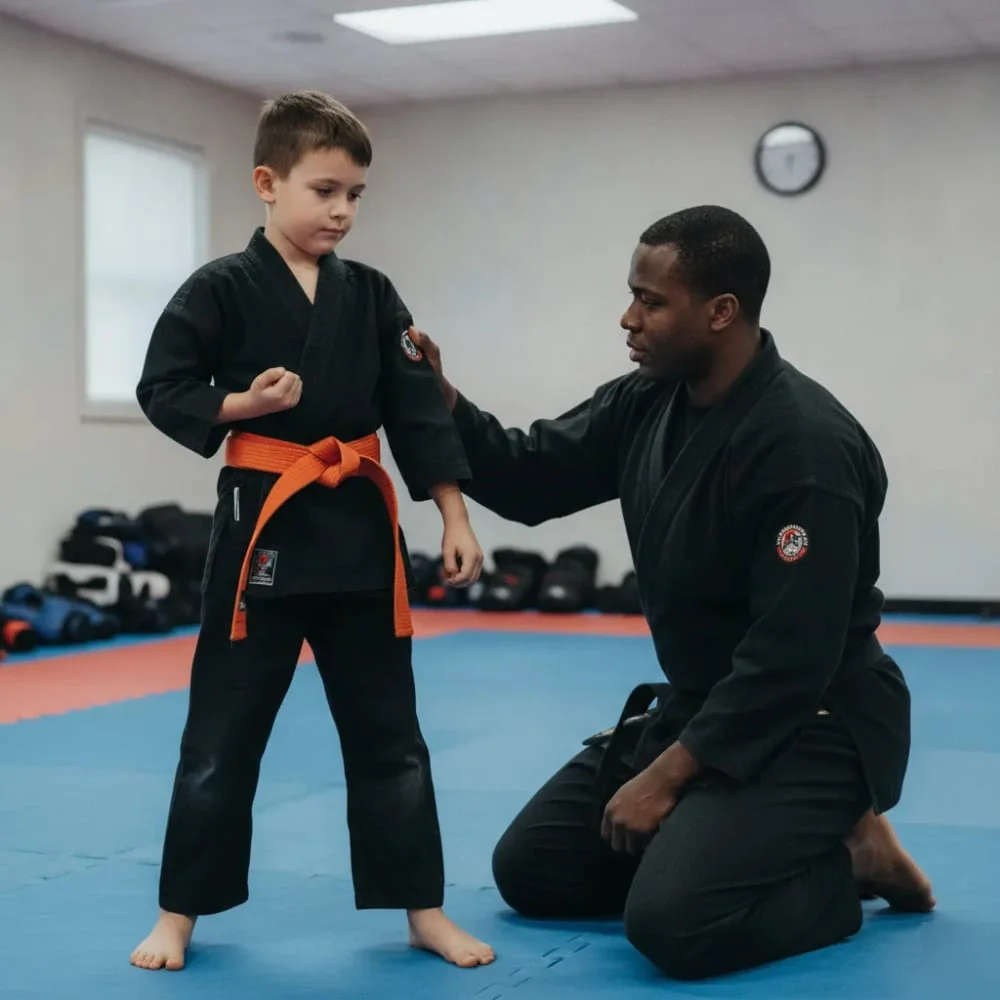
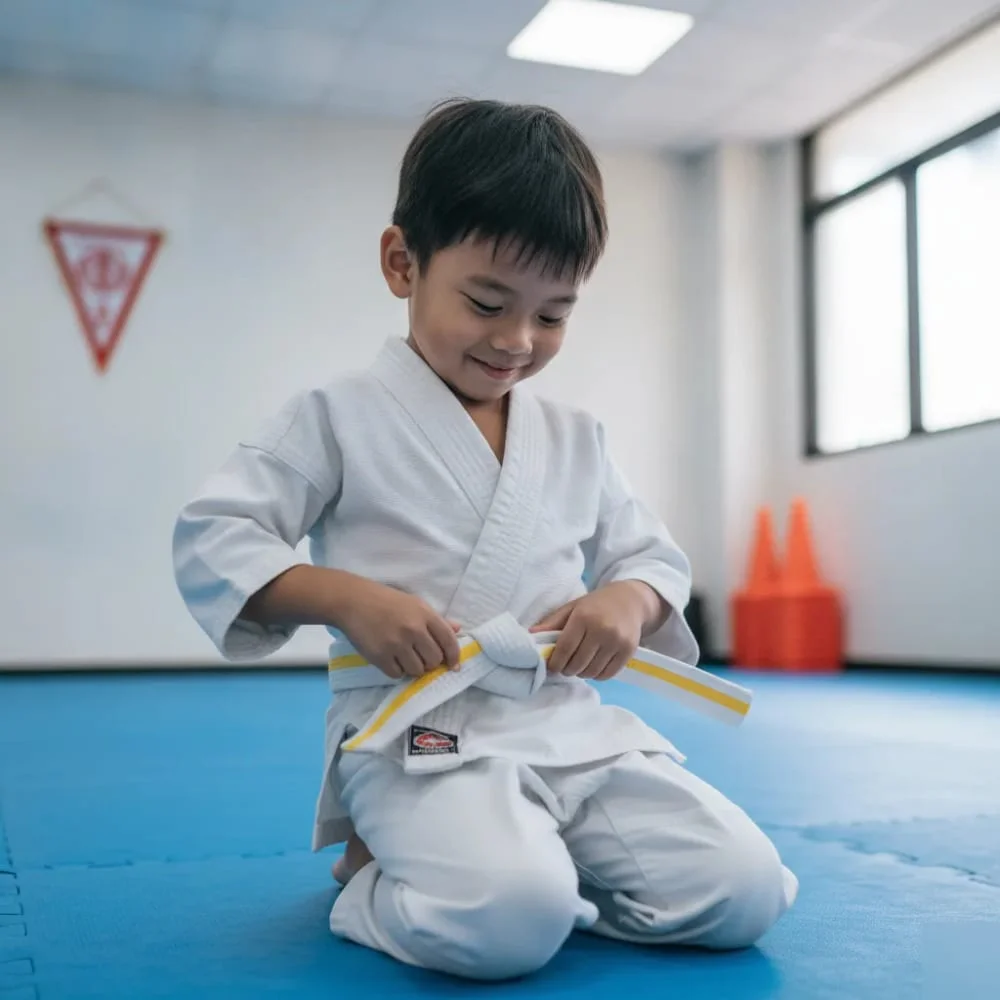
Our training method leaves room for different speeds and ways of learning. It's how we teach everyone. This means a student with sensory needs or a slower processing pace can train alongside their peers at James Martial Arts Academy in El Cajon. Here's what a class built to move at your child's pace actually looks like.
Individualized Pacing Comes Built Into Every Class, Not Added On
Quick SummaryOur training method leaves room for different speeds and ways of learning. It's how we teach everyone. This means a student with sensory needs or a slower processing pace can train alongside their peers.
Most schools build one curriculum, then try to squeeze every kid into it. We built our method the other way around. Every student moves through the same four stages. The timeline bends to fit the person, not the other way around.
Assess: Before a student throws a strike, we watch how they move, how they process instruction, and what calms or overwhelms them.
Build: We layer skills slowly, repeating what needs repeating. Some kids need a technique shown five times. Some need fifty. Both are fine here.
Challenge: Once a skill is solid, we push it further. This pace stretches the student without breaking their confidence.
Grow: Progress gets measured against that student's own starting point, not the belt rank of the kid next to them.
We see this every week. A parent tells us their child gets overwhelmed in group settings, or needs extra time to process a new movement. We adjust the drill, not the child. The issue isn't ability; it's pacing that was never designed with them in mind.
That's why we build pacing into the method itself.
Autism, ADHD, and Sensory Needs in El Cajon Respond Well to Structured Movement
Kids with autism, ADHD, or sensory processing differences struggle in environments that change every five minutes. A gym class one day, a birthday party the next, a new substitute teacher after that. Martial arts do not work that way. Same room. Same bow-in. Same warm-up sequence, class after class. That predictability is the point.
We've watched kids who couldn't sit still for two minutes at home hold a horse stance for thirty seconds. The structure gives their body a job to do. Often, fidgeting isn't defiance. It's a nervous system looking for input. Punching a pad, counting reps out loud, moving through a set pattern — these give that input a direction.
ADHD kids do better with movement broken into short, clear chunks rather than long stretches of sitting. Sensory-sensitive kids do better when they know what's coming next, with no surprises. Our four-step approach adjusts to each student's pace. It does not force every kid through the same drill at the same speed.
Not every child needs a modified approach to enjoy class. For the ones who do, the difference between a rough first week and a good one comes down to whether the instructor slows down or pushes through. This training builds on our age-based programs — Preschool Martial Arts, Kids Martial Arts, Preteen, and Teen Martial Arts. The same pace-adjusted structure applies to every student, whatever their age group.
So what does progress look like here? Sometimes it's small. A kid who used to melt down over a missed turn now waits their turn without a word.
Call (833) 894-0191 · James Martial Arts Academy is ready to help
What Happens During a Modified Training Session
Walk onto our floor during a class built for kids who need extra support and you will see structure. Every student needs to know what comes next before it happens. We build sessions around a rhythm the student can predict and trust.
Here's the honest answer: it looks a lot like our regular Kajukenbo and Kosho-Ryu classes, just paced differently.
Check-in and sensory read: We watch how the student walks in, their energy that day, and adjust the plan on the spot.
Warm-up with clear, repeated commands: Same words, same order, every class.
Technique breakdown in small pieces: One movement at a time, practiced until it clicks, not rushed to the next thing.
Positive reinforcement built into every rep: A nod, a high five, a called-out win in front of the class.
Closing ritual: Bow in, bow out, the same way every time. The student knows when class starts and stops.
That last step matters more than people think. A predictable ending gives a student closure. Closure lowers anxiety for the next class.
Our instructor applies the four-stage approach used across the academy. It stretches out at a pace that fits the student. Some kids move through a technique in one class. Others need six. Both are fine here.
We've had sessions where a student needed the whole first month just to feel comfortable standing in line. That's progress too, even if it doesn't look like a kick or a punch.
Questions to Ask Before You Enroll
Every good program should welcome hard questions. If a school gets defensive when you ask how they handle sensory sensitivity or communication delays, that tells you something. Ask before you enroll, not after your child has a bad first class.
How does the instructor adjust drills for kids who need extra time or a different way of hearing instructions?
What happens if my child gets overwhelmed mid-class? Is there a plan, or do they just push through?
Can my child work at their own pace, or do they have to keep up with the group to move forward?
Will the same instructor work with my child regularly, or does that change class to class?
How do you track progress for a student whose growth looks different from a typical student's?
What's the class size, and how much one-on-one attention should we expect?
We get asked most of these on the phone before a family steps on the mat. That's normal, and it's a good sign you're thinking it through. Our four-stage approach exists because kids don't all start in the same place or move at the same speed. We built it that way on purpose.
One more question worth asking: what does the instructor's own training background look like?
Sigung Darryl James trained under Sr. Grand Master Tony Bowles, carrying forward a 36-year Kajukenbo and Kosho-Ryu teaching lineage. That kind of depth matters when a child needs patience, not just a curriculum.
Watch Our Video
See How We Handle Martial Arts for Special Needs in El Cajon
When Martial Arts Should Support, Not Replace, Therapy
Let's be straight about this. Martial arts class is not occupational therapy. It's not speech therapy, ABA, or physical therapy either. If your child has a therapy team, keep that team in place. Our job is different, and smaller than people sometimes assume.
What we build on the mat is structure, repetition, and a place to practice following directions from an adult who isn't mom or dad. That carries over. Parents tell us their kid listens better at home after a few months. But we're not diagnosing anything, and we're not writing treatment goals. We use our step-by-step approach to move a student at their own pace. We do not try to hit clinical benchmarks.
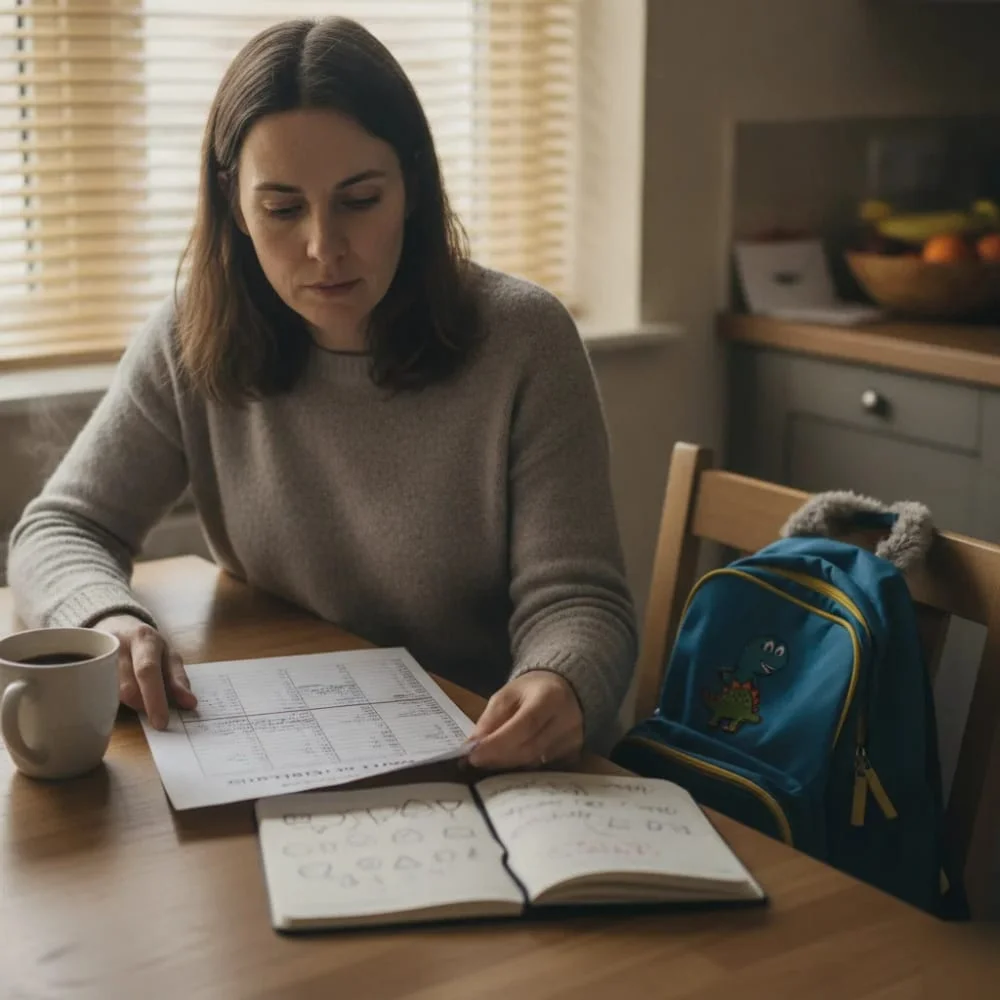
So how do you know if class is a good fit alongside therapy, not instead of it? Ask yourself a few things before signing up.
Does your child already have a therapy team, and are you planning to keep every session on the calendar?
Are you looking for a place to practice skills like listening and turn-taking in a group, not a replacement for one-on-one clinical work?
Can the instructor communicate with you regularly about small wins and rough days? This connects class to the bigger picture.
Is your child medically stable enough for physical activity? Have you flagged any therapist or doctor concerns to us before the first class?
If you answered yes to those, class helps. If your child is mid-crisis or a therapist has said to hold off on new activities, wait. We'd rather tell you that straight than watch a kid struggle in a room that isn't ready for them yet.
Preschool Martial Arts — ages 3–5, the youngest students who benefit from a modified approach.
Kids Martial Arts — the complete rundown of the age-based structure every student, including those who need a modified approach, trains under.
Preteen Martial Arts — ages 10–12, the same pace-adjusted method carried forward.
Teen Martial Arts — ages 13–17, our oldest students still trained at their own pace.
Questions Families Ask About Martial Arts for Special Needs
Frequently Asked Questions
What happens during my child's first class at James Martial Arts Academy?
Your child's first class starts with a simple check-in, where the instructor reads their energy and mood before anything else happens. From there, warm-ups use the same clear commands every time, so your child knows what to expect. Techniques get broken into small pieces, one movement at a time. Class always ends the same way, with a bow-in and bow-out ritual. That predictable start and finish helps kids with sensory needs or autism feel settled instead of anxious.
How long does it take to see progress with a child who has special needs?
Progress timelines vary a lot, and that is normal. Some kids pick up a new technique in one class, while others need six classes for the same skill. We have had students spend their whole first month just getting comfortable standing in line with the group. That counts as real progress here. We measure growth against each student's own starting point, not against the belt rank of the kid training next to them.
Do you work with families outside El Cajon, like Lakeside or Santee?
Yes, we serve families across East County San Diego, including Lakeside, Santee, Lemon Grove, and Spring Valley. Many parents drive in from these areas specifically because they want a school with a method that adjusts to their child's pace. If you're weighing the drive, know that families make this trip regularly for classes built around their kid's needs, not a one-size-fits-all curriculum.
Will the same instructor work with my child every class?
Consistency matters a lot for kids with sensory needs or communication delays, so this is a fair question to ask before enrolling. Kids who need extra support do better when they build trust with one instructor over time rather than adjusting to someone new each week. We encourage parents to ask this directly when they call, because the answer shapes how comfortable your child feels walking onto the mat.
What happens if my child gets overwhelmed in the middle of class?
The instructor watches for signs of overwhelm and adjusts the drill on the spot, rather than pushing your child through it. This might mean slowing the pace, repeating a step, or giving your child a moment before rejoining the group. The goal is never to force a student to keep up. It's to change the approach so the class still fits them that day.
Ready to Get Started? at James Martial Arts Academy
Every child moves at their own pace here, and we would rather show you than tell you. Claim a free trial class, no contract, no pressure, at our Martial Arts School in El Cajon.
Not sure which program is right? No worries, pick the one that matches your child’s age and we’ll make sure they’re in the perfect class during your free trial week.