Preschool Beginners Martial Arts in El Cajon: First Steps Toward Real Confidence
★★★★★ Trusted by 500+ El Cajon Martial Arts Families
Choosing a first martial arts class for a 3- to 5-year-old is different from picking one for an older child. Preschoolers need structure built specifically for short attention spans, big feelings, and a whole lot of energy. At James Martial Arts Academy in El Cajon, our Kosho Cubs program was built from the ground up for exactly this age group, not scaled down from an older curriculum. Here’s what to expect before, during, and after your child’s first class.
Contact James Martial Arts Academy to see if your preschooler is ready for a free trial class.
Quick SummaryMost 3- to 5-year-olds are ready for Kosho Cubs if they can follow a simple two-step direction and stand in one spot for a minute or two. You do not need a child who already sits still. You need a child willing to try.
Parents ask us this every week. Is my child too young? Is she too shy? Is he too wild? Here is the truth: Kosho Cubs is not built for kids who already have discipline figured out. It is built for the ones still learning it.
We watch for a few things during a first visit. Can the child separate from a parent for a short stretch? Can he copy a simple movement, like raising both hands, even if it is sloppy? Does she perk up when the instructor calls her name? None of these need to be perfect. A three-year-old who cries the first five minutes, then settles in, is normal. That often happens.
Can follow a one- or two-step direction, like "touch your toes then stand tall"
Shows curiosity about movement, kicking, punching, or copying you at home
Can wait a turn, even if only for thirty seconds
Responds to their own name being called across a room
Gets frustrated but can be redirected, rather than shutting down
If your child struggles with separation from you right now, or is dealing with a recent big change at home, waiting a few months is just timing.
Inside a Preschool Beginners Class: What Happens
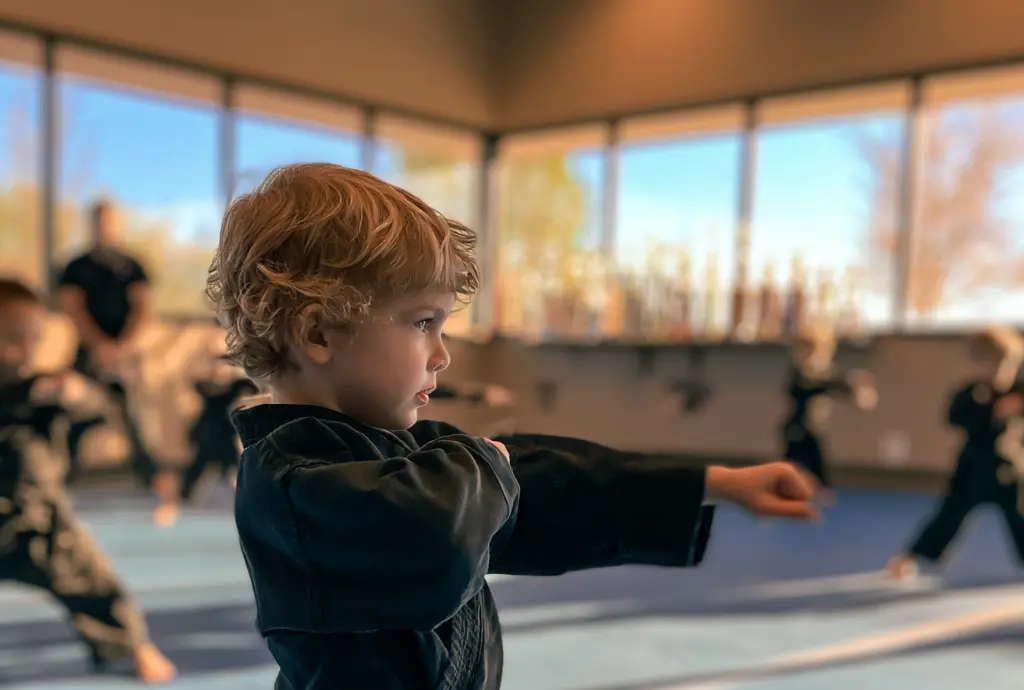
Walk into a Kosho Cubs class at James Martial Arts Academy, and you will see structure built small. Every class runs on the same four-step method we use with older students, just scaled down for a three-, four-, or five-year-old’s attention span. Assess. Build. Challenge. Grow. That is the actual lesson plan.
Warm-up games that teach listening before technique. Kids learn to freeze on command and follow a line.
Basic stance and balance drills, one skill at a time, repeated until it sticks.
Simple strikes and blocks practiced on pads, never on each other.
A short discipline segment: bowing in, waiting a turn, sitting still for thirty seconds.
A closing circle where the instructor calls out one thing each child did well.
We see this every week: a parent expects their kid to melt down by minute fifteen, and instead the child is locked in, trying to earn a nod from the instructor. That is the whole point of Kosho-Ryu Kenpo training built for this age. It is not about kicks and punches yet; it is about a little body learning it can control itself.
The first skill that sticks isn’t a technique at all. It is standing still.
How does this fit into the bigger picture of what we teach as kids grow? You can see the full breakdown on our preschool martial arts program page.
Watch Our Video
See a Preschool Beginners Martial Arts Class in El Cajon
When a Preschooler Isn’t Ready Yet
Not every three-year-old walks in ready. That is true, and I would rather tell you now than waste your family’s time later.
We see this every week. A parent calls, excited, and the child they describe sounds ready for anything. Then class starts, and the child spends the whole twenty minutes glued to mom’s leg. That is not failure. That is information.
Your child cries hard at every drop-off, not just the first one or two times.
They cannot yet follow a two-step direction, like "stop and sit down".
They are not potty trained, which makes a group mat setting tough on everyone.
Loud rooms or group settings cause real distress, not just shyness.
That doesn’t mean martial arts isn’t possible. It usually means wait a few months, or start with shorter exposure first. Our Assess step exists for this reason. We watch how a child responds on the mat before we ever talk about signing up. A child who is not ready in October is often ready by spring.
So how do you know the difference between normal first-day nerves and true not ready? Nerves fade by class two or three. True not ready looks the same every time. If that is where your child is right now, that is okay. Wait, and try again later. We would rather have an honest conversation with you than sign up a child who spends every class in tears.
Call (833) 894-0191 · James Martial Arts Academy is ready to help
Fitting Classes Around Half-Day Preschool and TK Schedules
Half-day preschool ends around noon. TK often wraps up by early afternoon. That leaves a window before dinner, before bath time, before the day slips away.
We hear it constantly from parents standing in our lobby. Their kid naps until 2, or gets picked up from TK at 1:15, or has a sibling’s practice across town at 4. Kosho Cubs classes get scheduled with that in mind, not against it.
A three- or four-year-old does not need a long class. Attention spans this age run short, so sessions stay tight and focused. No homework. No gear to wash. Just a kid who gets to move, listen, and burn off the wiggles before dinner.
Short class length matches a preschooler’s real attention span, not a school-day schedule.
Class times sit after typical half-day preschool and TK dismissal windows.
No extra gear or take-home work competing with nap time or dinner.
Consistent weekly slot so parents can plan around pickup and siblings.
The real question is not whether your schedule allows it. It does, once a parent sees the class time next to their preschool’s dismissal bell.
Call the academy and ask what slot lines up with your child’s preschool or TK schedule.
How Instructors Handle Shyness, Meltdowns, and Big Feelings
A three-year-old crying at the edge of the mat is not a red flag. It is Tuesday.
Every instructor who works with this age group has stood in front of a kid who will not let go of a parent’s leg, or one who suddenly melts down mid-drill because they dropped a foam pad. It is not defiance; it is overload. Little kids don’t have the words yet for big feelings, so those feelings come out sideways: tears, freezing up, or a sudden refusal to participate.
Our instructors are trained to slow down, not push through. A child who will not join the line gets invited to stand next to the instructor and watch first. No pressure, no singling out. Once they see three friends bow and step forward, they usually step in on their own within a class or two.
So how do you tell the difference between normal warm-up nerves and a kid who isn’t ready for group instruction yet? Watch what happens by week three. A child settling in more each class is on track. A child who is still overwhelmed at every session might need a few more months of maturity first, and it is fine to wait.
The structure itself does a lot of the calming work. Short attention spans get short activities, so nobody sits still long enough to spiral. Clear routines, the same warm up, the same bow in, the same closing circle, give little ones something predictable to hold onto. Predictable is calming. That is built into how the class runs.
We are not aiming for perfect composure in a four-year-old. We are aiming for a kid who is a little braver at the end of class than they were at the start.
Visit James Martial Arts Academy at 2356 Fletcher Pkwy or call to schedule your child's first class today.
Questions Families Ask About Preschool Beginners Martial Arts
Frequently Asked Questions
What age should my child start martial arts?
Most kids are ready for Kosho Cubs between ages 3 and 5, as long as they can follow a simple direction and stand in one spot for a minute or two. You don’t need a child who already sits still. You need one willing to try. We watch for signs like separating from a parent for a short stretch, copying a simple movement, and responding when their name is called. None of these need to be perfect. If your child is dealing with a big change at home right now, waiting a few months is just timing.
What should I bring to my child’s first class?
You don’t need any gear for your child’s first class at James Martial Arts Academy in El Cajon. Just bring your preschooler in comfortable clothes they can move in, like a t-shirt and shorts. We provide pads for strikes and blocks, so there’s nothing to buy before you try a class. Expect warm-up games, balance drills, and a closing circle where the instructor calls out one thing your child did well. Arrive a few minutes early, so your child can meet the instructor before class starts.
What happens after my child tries the first class?
After your child’s first class, we talk with you about what we saw during warm-up games, balance drills, and the closing circle. This tells us whether your preschooler is ready to start regularly, or whether a few more months would help first. Nerves that fade by class two or three are normal. Nerves that look the same every time usually mean waiting a bit longer is the better choice. Either way, we would rather have an honest talk with you than sign up a child who spends every class in tears.
How do class times work with half-day preschool or TK pickup?
We schedule Kosho Cubs classes around half-day preschool and TK dismissal times, so families driving in from Lakeside, Santee, Lemon Grove, and Spring Valley can make it without rushing. Half-day preschool often ends around noon, and TK often wraps up by early afternoon, leaving a window before dinner and bath time. Classes stay short to match a preschooler’s real attention span, so no homework or extra gear competes with nap time. Call the academy and ask which class time best fits your child’s preschool or TK schedule.
What if my child cries or has a meltdown during class?
A little one crying at the edge of the mat is normal, not a red flag. Every instructor working with this age group has seen a child cling to a parent’s leg or melt down over a dropped foam pad. It usually means the child is overloaded, not defiant. Preschoolers don’t have the words for big feelings yet, so those feelings come out as tears or freezing up instead. Instructors redirect gently rather than push through it, and most kids settle in within the first few classes.
How do I know if my preschooler isn’t ready yet?
A child usually isn’t ready yet if they cry hard at every drop-off, not just the first few times, or cannot follow a simple two-step direction like stop and sit down. Being potty trained also matters, since a group mat setting is tough without it. None of this means martial arts is off the table forever. It often means waiting a few months or trying shorter exposure first. We watch how your child responds on the mat before we ever talk about signing up.
Ready to Get Started? at James Martial Arts Academy
Most parents tell us they knew within the first ten minutes, not because we said something clever, because they watched their kid’s face. Book your preschooler’s free first week, no contract, no pressure, at our Martial Arts School in El Cajon.
Not sure which program is right? No worries, pick the one that matches your child’s age and we’ll make sure they’re in the perfect class during your free trial week.