Adult Self-Defense Starts With an Honest Skill Assessment
Honest Adult Self-Defense training starts with an assessment, not a curriculum. We look at how you move right now, how your body reacts under pressure, and what your daily life looks like. That picture decides what you learn first and how fast you go.
Most adults who walk in here haven't trained in years. Some never have. They tell us the same thing, almost word for word: I'm not in shape enough for this yet. And that's backwards. Getting in shape isn't the entry fee, it's one of the results.
So we start by looking at you. How's your balance on one foot? Can you get down to the ground and back up without a wall? Do your shoulders move freely, or did an old injury lock something up? That's the Assess step of our four-step method, and it takes one class to get a real read.
The second thing we check is harder to see. How do you respond when someone crowds your space? Some people freeze. Some people talk too much. Some people swing first and think later. None of those are wrong, they're just your default, and you need to know your default before you can train it. Nine times out of ten, a student is surprised by their own answer.
Then there's your actual life. A nurse walking to her car after a night shift at a Fletcher Parkway medical office needs different reflexes than a guy who parks in his own driveway. Do you travel? Do you have kids with you? Are you carrying bags most of the time? Those details change what we drill first.
Assessment isn't a test you pass or fail. It's a starting map. We've used it with over 500 families, and the students who stay three years and beyond are almost always the ones who got an honest read on day one instead of a generic beginner program. You can't build practical skill on a guess, you build it on what's true about your body today.
Choosing Between Striking, Grappling, and Practical Self-Defense
Most adults walk in already confused. They've watched a cage fight, seen a boxing gym, heard someone say grappling beats everything. So they try to pick a style before they've picked a purpose. That's backwards.
Striking arts teach you to hit and not get hit. Boxing, kickboxing, traditional karate. The hands get fast, the timing gets sharp, the conditioning is real. Grappling arts teach you what happens after the distance closes. Clinch, takedown, ground control. Both are valuable. Both have a blind spot when the situation isn't a match.
A real attack has no referee, no weight class, and no bell. There's often more than one person. There's a parking lot curb, a car door, a purse in your off hand. The ground is asphalt, not mat. Practical self-defense trains for that mess. Kajukenbo was built exactly this way, striking, joint locks, takedowns, and escapes blended together because the founders wanted what worked on the street, not what scored points. Kosho-Ryu Kenpo adds the part most people skip: reading distance and angle so you never end up in the fight at all.
Not sure which one fits you? Ask better questions instead of comparing style names.
- Does the class ever train from a seated, standing, or walking start, not a squared-up stance?
- Do they teach getting up off the ground, or only staying on it?
- Is escape treated as a win, or only a submission?
- Can the instructor explain why a technique works, not just how?
Adults comparing self-defense classes in El Cajon should judge a school by how it handles those four answers. We teach Kajukenbo and Kosho-Ryu because that lineage was tested in real encounters long before it reached our mats, and it still gets taught that way here. Sigung Darryl James trained under Sr. Grand Master Tony Bowles, and that 36-year teaching line shows up in every class detail.
Pick the purpose first. The style follows. That same focus carries through the practical self-defense guidance our team provides to families across El Cajon.
Group Self-Defense Training Is Not Right for Every Goal
Here's the part most schools won't tell you. Adult Self-Defense in a group class isn't the right answer for every person who calls us.
If you need a skill by next week, we can't give it to you. Real defense is trained, not downloaded. A single seminar can teach you how to break a wrist grip and yell, and that's worth something. But it won't change how you move under stress. That takes months of repetition with a partner who resists. Anyone promising otherwise is selling you comfort, not capability.
Some folks should look elsewhere first, and we'd rather say so up front.
- You're recovering from surgery or an acute injury. Get cleared by your doctor first. We'll still be here.
- You want competition, tournaments, and a medal shelf. Kajukenbo and Kosho-Ryu are built for practical, real-world defense, not sport scoring.
- You're facing an active threat right now. That's a call to law enforcement, not a call to a martial arts school.
- You're looking for a cardio class with punching. There are gyms in El Cajon that do that well, and they do it cheaper.
- You want a women's-only room. That's a different program with a different structure, and it exists for good reason.
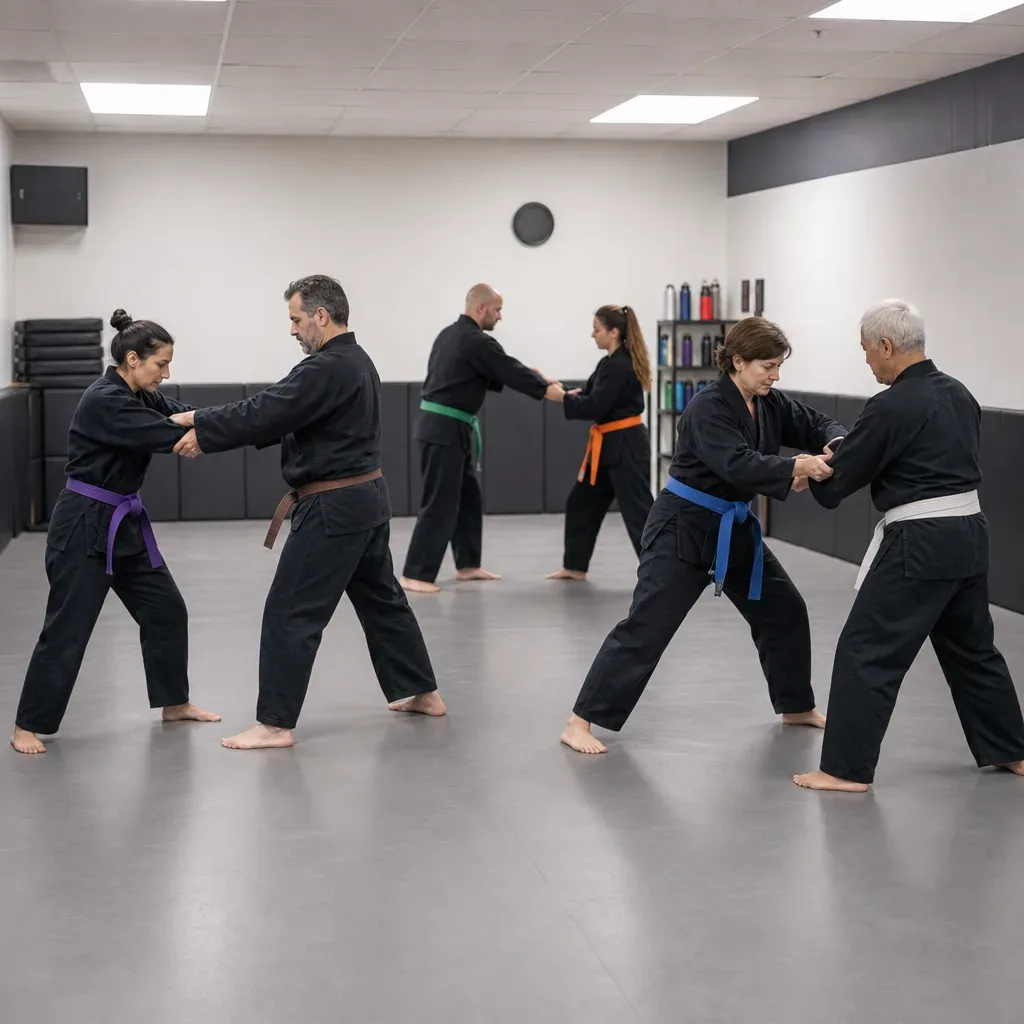
Now the flip side. If your goal is to build a skill you'll still have in five years, group training is the strongest option. You need partners of different sizes. You need someone who doesn't cooperate. You can't get that from a video or a mirror.
Our average student sticks around more than three years. That number tells you what this is. Not a weekend fix, it's a practice.
What to Expect Before Your First Class in El Cajon
Most adults who call us are nervous. Not about getting hit. About looking foolish in front of a room full of strangers. We hear it every single week, usually in the same apologetic tone: "I haven't worked out in years." Good. That's who this training is built for. You don't need to be in shape to start, you get in shape by starting.
Wear something you can move in. Athletic shorts or sweats, a t-shirt, and bring water. That's it. No uniform on day one. We train barefoot on mats, so leave the shoes at the edge of the floor.
Here's how a first class runs:
- You arrive about ten minutes early and meet the instructor face to face. We ask about old injuries, surgeries, bad knees, bad shoulders. Tell us the truth so we can work around it.
- You warm up with the class. Basic movement, footwork, nothing acrobatic.
- You learn one or two practical techniques. Usually escaping a wrist grab or covering your head. Things that work the first day.
- You drill them slowly with a partner who already knows the drill and knows you're new.
- Afterward, you talk with the instructor about what you're trying to fix.
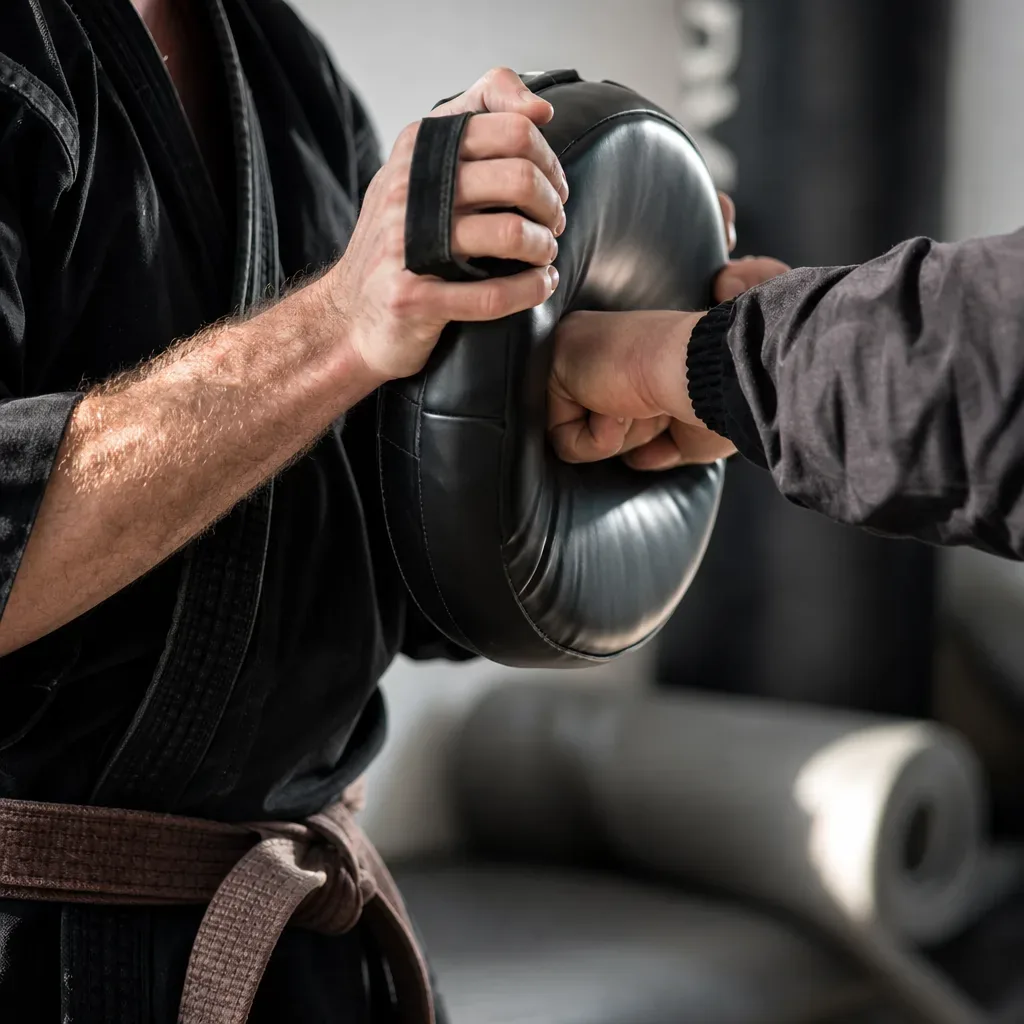
Nobody is going to spar you. Nobody is going to test you. Our Assess, Build, Challenge, Grow method starts with assess for a reason, we need to see where you are before we ask anything of you.
Worried you'll be the oldest person on the mat? You almost certainly won't be. Our adult floor runs from folks in their twenties to people well past fifty, and East County parents often start after their kids do. That's been the pattern here since 2010.
You will be sore the next day. You will also drive home knowing something you didn't know that morning.
Building Real Capability Takes Sustained Practice, Not One Session
Here's the part nobody likes hearing. A two-hour seminar does not give you Adult Self-Defense. It gives you information. Information disappears under stress: your heart rate climbs, your hands shake, and the thing you learned Saturday morning is gone by the time you need it.
Skill is different. Skill lives in the body, and the body only learns through repetition. We drill the same handful of core responses hundreds of times across months. Same escape. Same base. Same footwork. Boring, but boring is what makes it automatic, and automatic is what survives a real moment.
Nine times out of ten, the adults who make the fastest progress aren't the athletic ones. They're the ones who show up twice a week without fail.
Our 4-step method exists for exactly this reason. We assess where you are. We build a base you can repeat. We challenge it with pressure and resistance, so you find out what holds. Then we grow it, adding range and complexity only after the foundation is solid. Skipping a step feels faster. It isn't.
Think about what a bad moment really looks like. You're walking to your car after a late shift, the lot is half empty, and someone closes distance faster than feels normal. You don't get time to remember a technique. You get about a second and a half to move. That second and a half is built over months of training, not over a weekend.
That's also why our students average over three years with us. The people who stay stop thinking about self-defense as a course they completed. It becomes something they maintain, like fitness. And the confidence that comes with it isn't a feeling they got once, it's one they keep renewing every week on the mat. Ready to start? Book a free trial at our self-defense school in El Cajon and feel the difference for yourself.