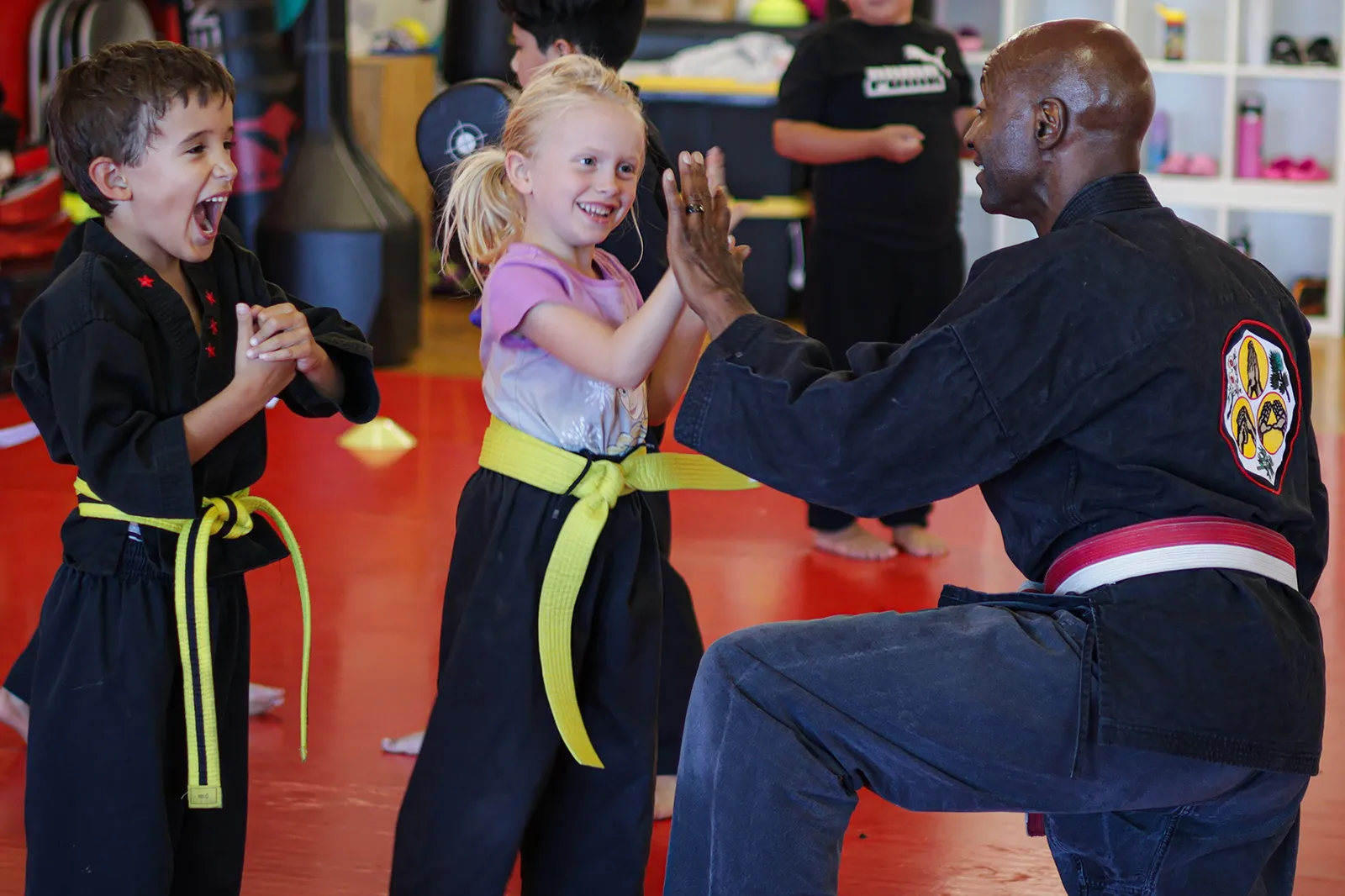
Authentic Kosho-Ryu · A 400-Year Japanese Tradition
Kosho-Ryu Training in El Cajon
The Old Pine Tree School, taught at James Martial Arts Academy by a 3rd-degree Kosho-Ryu black belt who's lived inside the tradition for 30+ years. Balance, movement, and principle, the way Japan has trained it for four centuries.
⚡ Limited trial spots available this month
The Modern Sport-Gym Approach
Sport first. Principle never.
Modern sport-karate schools chase tournament trophies. The training is loud, fast, and built around a scoreboard, not a centuries-old principle.
MMA gyms train you to fight in a cage, useful for competition, but they skip the awareness, posture, and de-escalation that traditional Japanese arts spent four centuries refining.
Most American karate schools borrow Japanese vocabulary but teach a watered-down sport version, no certified lineage, no traditional principle, no Kosho-Ryu in sight.
Other arts are good arts. They're just not the same art. If your goal is calm, principle, and 400 years of refined movement, you need a different room.
You can't sport-trophy your way into four centuries of principle.
What Changes When You Train Kosho-Ryu Here
A Calmer Body. A Sharper Mind. A Quieter Kind of Capable.
Kosho-Ryu isn't a collection of techniques. It's a way of moving through the world, balanced, perceptive, and ready before anything happens. These are the shifts students and parents describe, unprompted, after the first couple of months at James Martial Arts Academy.
Balance and Body Awareness
Kosho-Ryu builds the kind of balance you feel on the mat and use on the sidewalk. Posture, footing, and weight distribution become second nature. Students stand straighter, move smoother, and trip less, all of it.
Calm Focus Under Pressure
The training is quiet. Demanding attention over aggression. The focus you build on the floor carries straight into school, work, and the moments at home that ask the most of you.
Awareness That Sees Trouble Coming
Kosho-Ryu's first weapon is awareness. Who's in the room. Where the exits are. What the body language is saying. After a few months, students start noticing things they never noticed before, on the floor and off.
Movement Principles That Transfer Off the Mat
The way you move under pressure on the training floor is the way you move in life. Posture in a meeting. Distance at a crowded venue. Footing on icy concrete. Kosho-Ryu trains the body to handle all of it.
Self-Defense Refined Over Four Centuries
Kosho-Ryu spent 400 years stripping away what doesn't work. What's left is a way of avoiding, de-escalating, and, if absolutely necessary, ending a problem with the smallest correct response.
Character Built Alongside Skill
Respect, humility, and quiet confidence aren't side notes here, they're stitched into every Kosho-Ryu class. You leave each session a little sharper, a little steadier, a little more capable, in every sense of the word.
The Old Pine Tree School, Explained
What Is Kosho-Ryu, Really?
Kosho-Ryu is the Old Pine Tree School, a Japanese martial art with a tradition stretching back roughly 400 years through the Mitose family. It's not a sport. It's not a tournament style. It's an art built around balance, movement, and principle, refined across four centuries of careful teaching.
Kosho-Ryu, the Old Pine Tree School
The name translates roughly as "Old Pine Tree School." The pine is a Japanese symbol of endurance, calm strength, and quiet adaptability, the bend-don't-break quality the art has carried for four centuries.
The Mitose Lineage
Kosho-Ryu was preserved by the Mitose family in Japan for roughly 400 years. James Mitose carried the art to Hawaii in the 20th century and taught it publicly for the first time, shaping a generation of American martial artists from that single line.
Balance, Movement, Technique
The training is built in that order. Balance first. Movement second. Technique grows out of both. Students learn to position, read distance, and use the smallest correct response, instead of forcing a flashy one.
Awareness as the First Weapon
Before any technique is taught, students train awareness, who's in the room, where the exits are, what the energy in a space feels like. 400 years later, it's still the skill Kosho-Ryu puts in your hands first.
De-escalation Over Confrontation
The Kosho-Ryu order of response is: see it coming, avoid being there, resolve verbally, and only then respond physically. The art trains you through all four, in that order, so the physical response is the last option, not the first.
Principle Over Flashy Technique
You won't see a Kosho-Ryu black belt chasing the spinning kick. You will see them positioned, balanced, and exactly where they need to be. The principle is the point. Once the principle is right, the technique mostly takes care of itself.
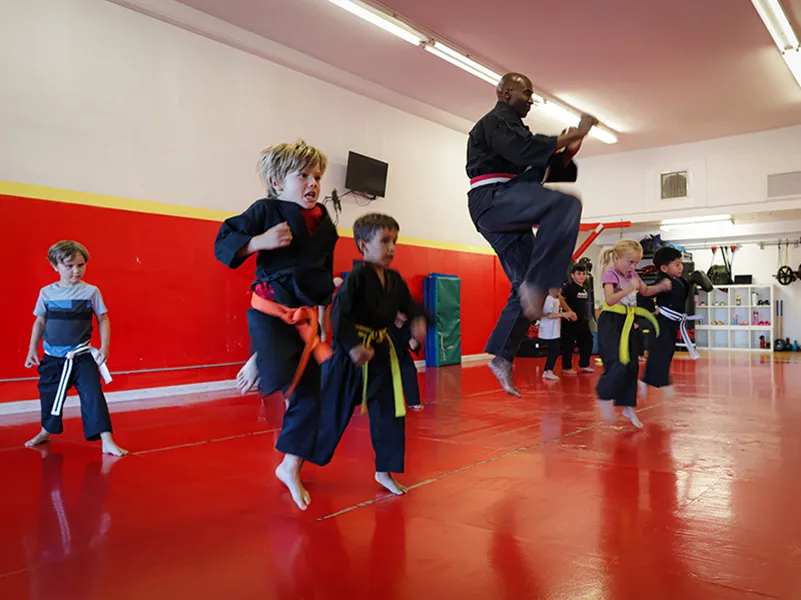
Why Train Kosho-Ryu at James Martial Arts Academy
A Rare Art. A Verifiable Lineage. The Real Thing.
Authentic Kosho-Ryu is rare in the United States. Most martial arts schools focus on sport karate, BJJ, or generic mixed disciplines, and very few have a certified Kosho-Ryu instructor with traceable lineage. Here's what training the real art at James Martial Arts Academy actually looks like.
A 3rd-Degree Kosho-Ryu Black Belt on the Floor
Sigung Darryl James, 3rd-degree black belt in Kosho-Ryu, 6th-degree in Kajukenbo, USA Martial Arts Hall of Fame inductee, with 36+ years on the training floor, teaches every class himself. Not a teenage assistant. Not a rotation of certified strangers. The same face, the same standard, every session. Meet your Kosho-Ryu instructor.
Certified Kosho-Ryu Instructor, Verifiable Lineage
Sigung James is a Certified Kosho-Ryu Instructor. That matters. Anyone can put Japanese vocabulary on a sign. Very few can trace an actual line back through the Mitose tradition. At James Martial Arts Academy you're learning the real art, taught by someone who's earned the right to teach it.
Family-Owned. 500+ Students. Since 2010.
James Martial Arts Academy isn't a franchise. Sigung James teaches alongside his family. We know every student's name, what they're working through, and exactly what they need to reach the next level. 500+ students since 2010, families that have stayed for years, not a revolving door. Read about the academy and our Kosho-Ryu tradition.
One of the Few Schools Teaching Kosho-Ryu in East County
Walk into ten martial arts schools across San Diego County and ask for authentic Kosho-Ryu instruction. You'll usually hear silence, or marketing language. James Martial Arts Academy is one of the rare schools where Kosho-Ryu is actually taught, as part of a real, lineaged curriculum. Read about Japanese martial arts in San Diego.
Real Students · Real Kosho-Ryu
What Training Kosho-Ryu at James Martial Arts Academy Actually Feels Like
You can also see what Kosho-Ryu students experience at the dojo across our full reviews.
"The instructor is amazing. He's warm and welcoming, inviting, but the Kosho-Ryu training is the real thing, calm, focused, and rooted in something much older than us."
James Martial Arts Academy Family · Google Review
"James Martial Arts Academy is one of the best decisions we've ever made. Sigung Darryl is kind, patient, yet firm, and the balance and awareness our family has built through Kosho-Ryu is the real difference."
James Martial Arts Academy Student Family · Google Review
"We were lucky to find James Martial Arts. Sigung reaches every student where they are. The Kosho-Ryu principles, awareness, posture, calm response, have shown up at home in ways we didn't expect."
James Martial Arts Academy Family · Google Review
What's included with Kosho-Ryu training at James Martial Arts Academy, $180/month
- Sigung Darryl James personally on the floor every class, 3rd-degree Black Belt in Kosho-Ryu, 6th-degree in Kajukenbo, 36+ years on the training floor, USA Martial Arts Hall of Fame inductee, Certified Kosho-Ryu Instructor. Not a junior instructor with a weekend cert.
- Authentic, lineaged Kosho-Ryu curriculum, the Old Pine Tree School as it's been taught for 400 years, paired with Kajukenbo for practical capability, Kickboxing for conditioning, and Kung-Fu fluidity. Most schools teach one art; here you train across the whole tree.
- Age-separated programs, a 4-year-old isn't training next to a 13-year-old. Real per-age curriculum, real per-age class structure, same Kosho-Ryu principles woven through every level.
- Small class sizes, we know your name (or your child's name) by class 2. We know what you're working through and what makes you light up.
- Locally owned and operated since 2010, same instructor on the training floor every day. No franchise rotation. No corporate dilution.
- Real belt progression, earned through demonstrated mastery, not handed out for showing up. Belt testing fees ensure tests are taken seriously, not treated as participation badges.
- No surprises, $0 registration fee. No equipment bundles. No contract pressure. Pricing is exactly what we say it is.
- Authentic Kosho-Ryu, taught in every program, Preschool, Kids, Preteen, Teen, Adult, and Women's Self-Defense, the same art delivered age-appropriately at every stage.
Industry comparison: comparable programs at established East County schools typically run $150–$250/month. At $180/month with no registration fee, James Martial Arts Academy is mid-market priced for top-tier instruction.
Find Your Starting Point
Train Kosho-Ryu in the Right Age-Specific Program
Kosho-Ryu principles run through every age-based class at the academy, the art unchanged but the pace tuned to each stage. Here's how to find your entry point: preschool karate classes for ages 3 to 5, kids karate classes for ages 6 to 9, preteen training for ages 10 to 12, teen training for ages 13 to 17, adult classes for students 18 and up, and women's self-defense for women 18 and up. See our complete program lineup by age group, or read about the history of Kosho-Ryu, the 400-year Old Pine Tree tradition behind the system. Review the weekly class times at the dojo, book a free trial, contact the front desk, browse common questions about Kosho-Ryu training, or visit our family-run El Cajon dojo, part of the karate school that runs Kosho-Ryu Kenpo classes in El Cajon, teaching East County since 2010.
Want the full picture first? Our guide on Kosho-Ryu training in El Cajon covers the 36-year teaching lineage behind the art, who the program fits, and what the four-step training method looks like in practice.
Questions & Answers
What People Ask Before They Start Training Kosho-Ryu
What is Kosho-Ryu?
Kosho-Ryu is a Japanese martial art with a 400-year tradition, often called the Old Pine Tree School. It's built around balance, movement, and principle rather than flashy technique. Students learn to position, read distance, and respond with the smallest correct response. At James Martial Arts Academy, Kosho-Ryu is taught by Sigung Darryl James, a 3rd-degree black belt and Certified Kosho-Ryu Instructor with 36+ years of experience.
Who created Kosho-Ryu?
Kosho-Ryu was passed down through the Mitose family in Japan for roughly 400 years. The most well-known lineage figure in the modern era is James Mitose, who carried the art to Hawaii in the 20th century and taught it publicly for the first time. From that line, Kosho-Ryu eventually shaped a generation of American martial artists, including the founders of Kajukenbo.
How is Kosho-Ryu different from karate or judo?
Karate emphasizes striking. Judo emphasizes throwing. Kosho-Ryu emphasizes the principles underneath both, balance, posture, distance, timing, and the awareness to avoid a fight before it starts. The result is a calmer, more perceptive student. The physical technique grows out of the principle, not the other way around.
Is Kosho-Ryu good for kids?
Yes. Kosho-Ryu's focus on awareness, posture, and self-control makes it especially good for children. At James Martial Arts Academy the principles are taught age-appropriately as games, movement drills, and simple questions starting at age 3. Parents tell us their child becomes more observant, more settled, and more in control within the first couple of months.
What does Kosho-Ryu mean?
Kosho-Ryu translates roughly as the Old Pine Tree School. The pine tree is a Japanese symbol of endurance, calm strength, and quiet adaptability, qualities the art has carried for 400 years. The name reflects the philosophy: long-living, deeply rooted, and bending with pressure instead of breaking against it.
Do I need prior martial arts experience to train Kosho-Ryu?
No. Most students at James Martial Arts Academy walk in with zero martial arts background. Sigung James teaches Kosho-Ryu fundamentals, balance, movement, posture, and awareness, from the ground up, no matter your age. Every belt rank is earned by demonstrating mastery of the material at that level, so you start where you start and progress at the pace you actually progress.
What ages can train Kosho-Ryu at James Martial Arts Academy?
Kosho-Ryu principles are woven into every age-specific program at James Martial Arts Academy: Preschool (ages 3-5), Kids (ages 6-9), Preteen (ages 10-12), Teen (ages 13-17), Adult (18+), and Women's Self-Defense (women 18+). Depth grows with age, but the foundation, awareness, balance, and controlled response, begins on day one.
Is Kosho-Ryu still actively taught in the United States?
Authentic Kosho-Ryu is rare in the United States. Most martial arts schools focus on sport karate, BJJ, or mixed disciplines, and very few have a certified Kosho-Ryu instructor with verifiable lineage. James Martial Arts Academy is one of the few schools in East County San Diego where Kosho-Ryu is taught by a 3rd-degree black belt as part of an authentic, lineaged curriculum.
What's the connection between Kosho-Ryu and Kajukenbo?
Kosho-Ryu shaped the Kenpo line that influenced Kajukenbo's founders in 1947 Hawaii. The arts share roots, and at James Martial Arts Academy they're taught alongside one another. Kajukenbo delivers the physical toolkit; Kosho-Ryu trains the awareness and principle to use it sparingly. Sigung Darryl James holds black-belt rank in both, and most James Martial Arts Academy students study both.
Is there Kosho-Ryu training near me in El Cajon?
Yes. Authentic Kosho-Ryu is rare, James Martial Arts Academy teaches it in El Cajon under a certified 3rd-degree Kosho-Ryu black belt instructor, a short drive from across East County San Diego.
3 Simple Steps to Book Your Free Trial
👇 Click a program card below to get started
Preschool Martial Arts
Where restless preschoolers discover focus
- Attention span that surprises teachers
- Following directions without tantrums
- Confidence in new situations
Kids Martial Arts
From unfocused to confident achievers
- Homework finished without battles
- Standing up to bullies verbally first
- Friends who lift them up
Preteen Martial Arts
Where challenge-seeking kids find discipline
- Self-control that transfers everywhere
- Leadership skills teachers notice
- Earned respect from peers
Teen Martial Arts
Teens building identity through mastery
- Purpose beyond screens and peers
- Mental toughness for life's pressure
- Confidence colleges actually notice
Adult Martial Arts
Real self-defense, real results, real community
- Functional self-defense that works
- Best workout you'll actually enjoy
- Training partners who become family
Women’s Self-Defense
Walk with confidence, not fear
- Verbal de-escalation first
- Physical techniques that work
- Supportive, judgment-free space
Not sure which program is right? No worries, pick the one that matches your child's age and we'll make sure they're in the perfect class during your free trial week.