Understanding Tang Soo Do: A Korean Art with Ancient Roots
Tang Soo Do is often mistaken for Taekwondo or generic “karate,” but it stands as a distinct Korean martial art with a philosophy, technique set, and training culture uniquely its own. For students and families exploring martial arts in El Cajon, understanding these differences helps you choose a path that aligns with your values.
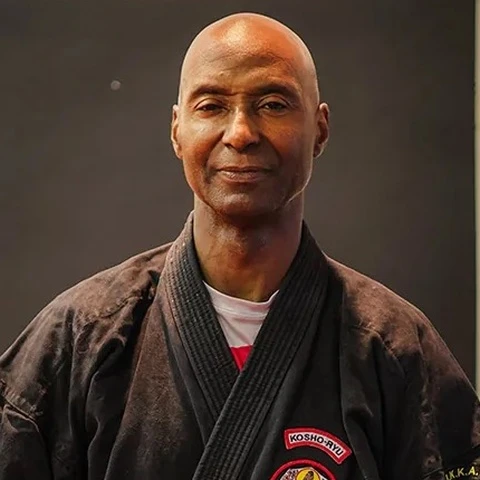
At James Martial Arts Academy, Sigung Darryl James draws from multiple martial arts traditions, including Tang Soo Do’s emphasis on form, power, and mental discipline, to build a comprehensive curriculum.
The Historical Roots of Tang Soo Do
Tang Soo Do translates roughly to “The Way of the Chinese Hand,” acknowledging the art’s dual heritage. It blends:
- Korean kicking traditions (Subak and Taekkyeon) dating back over 2,000 years
- Chinese martial philosophy and hand techniques, particularly from Northern and Southern Chinese systems
- Japanese Shotokan Karate influences, introduced during the Japanese occupation of Korea
Grandmaster Hwang Kee founded the Moo Duk Kwan school in 1945, systematizing these influences into what we now recognize as Tang Soo Do. Unlike Taekwondo, which became an Olympic sport and evolved accordingly, Tang Soo Do has largely resisted sportification, remaining focused on self-defense, forms, and character development.
What Sets Tang Soo Do Apart
Powerful and Diverse Kicking Arsenal
Tang Soo Do is renowned for its dynamic, high-section kicks: spinning hook kicks, jumping back kicks, and crescent kicks executed with precision and power. But unlike sport-oriented styles, Tang Soo Do equally emphasizes low and mid-level kicks designed for practical self-defense applications.
Hyung (Forms) as Moving Meditation
Forms, called hyung in Tang Soo Do, are choreographed sequences of techniques performed solo. They serve as a repository of the art’s knowledge, encoding self-defense applications, breathing patterns, and body mechanics into repeatable practice. Advanced practitioners spend years refining a single hyung, discovering deeper layers of application with each iteration.
The Fourteen Attitudes
Tang Soo Do practitioners study fourteen guiding attitudes that govern both training and daily life. These include concepts like purpose of training, respect, self-control, and indomitable spirit. Unlike arts that treat philosophy as an afterthought, Tang Soo Do integrates these attitudes into belt testing, class structure, and instructor expectations.
Tang Soo Do vs Taekwondo: The Key Differences
People commonly confuse these two Korean arts. The distinctions matter:
- Taekwondo became an Olympic sport, which pushed its training toward point-scoring kicks and away from hand techniques and self-defense
- Tang Soo Do retained its traditional curriculum including strong hand strikes, joint locks, and takedowns alongside kicks
- Taekwondo standardized under the WTF/WT and ITF organizations; Tang Soo Do maintained more diversity across its schools
- Tang Soo Do practitioners do not call themselves “black belts,” they earn the rank of Midnight Blue Belt, symbolizing that mastery is a continuous pursuit, never a destination
How Tang Soo Do Principles Enhance JMAA’s Curriculum
James Martial Arts Academy teaches martial arts in El Cajon by drawing from the strongest elements of multiple traditions. Tang Soo Do’s emphasis on discipline through forms, respect through protocol, and power through proper body mechanics complements the street-practical techniques of Kajukenbo and the philosophical depth of Kosho-Ryu.
Sigung Darryl James believes that a well-rounded martial artist understands why each tradition developed its methods, not just how to execute them.
Begin Your Journey
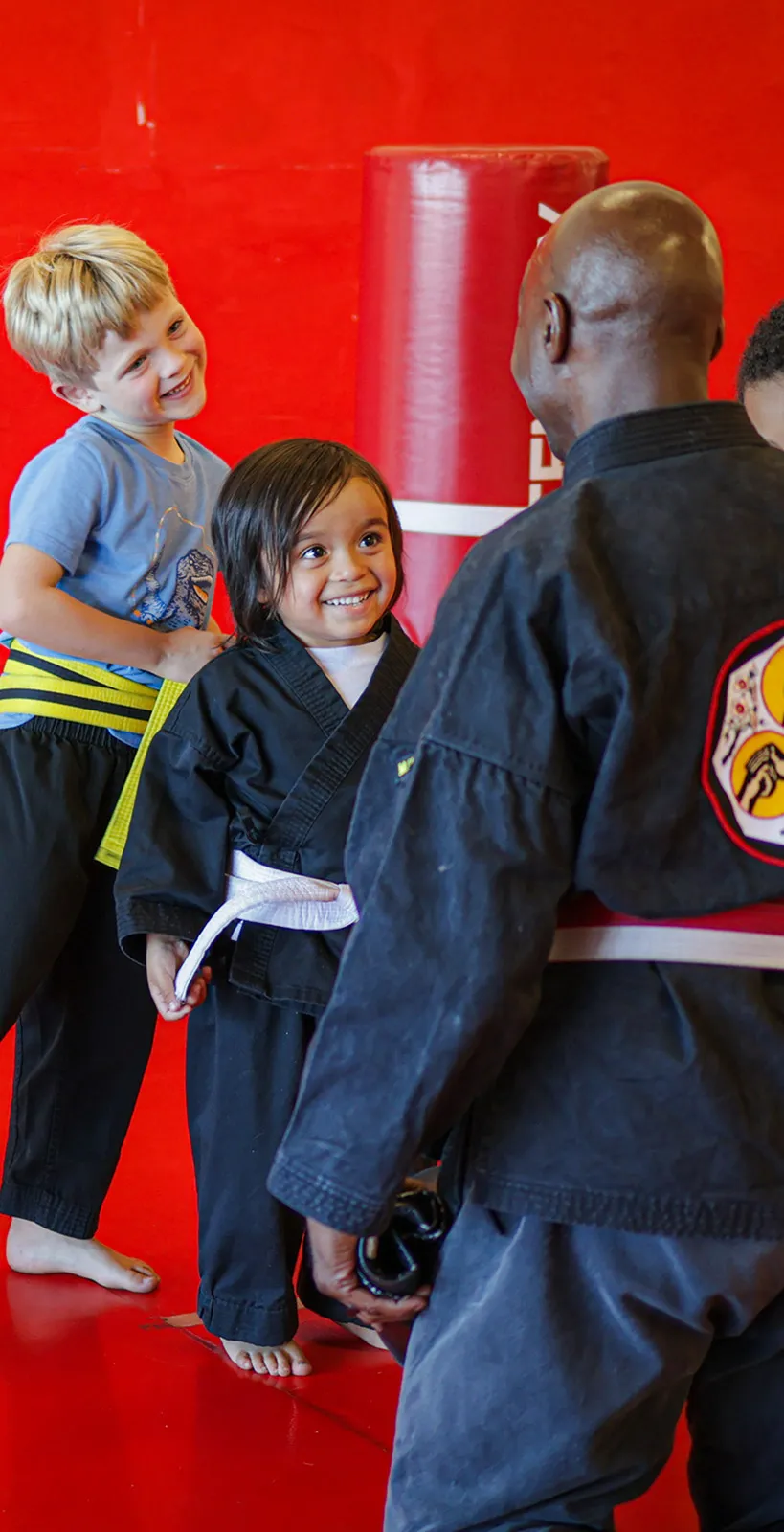
Whether Tang Soo Do’s philosophy resonates with you or you’re drawn to another discipline taught at JMAA, the first step is the same: step onto the mat. Claim your free trial class and discover which path fits your goals.
Visit James Martial Arts Academy at 2356 Fletcher Pkwy, El Cajon, CA 92020. Call (833) 894-0191.
Whatever discipline calls to you, you’ll find it among the styles we teach at our karate school.