Signs Your Child Is Ready for Self-Defense Training
A child is ready for Kids Self-Defense when they can follow a two-step instruction and keep their hands to themselves for a few minutes at a time. Athletic ability, size, and confidence are not entry requirements. Those are outcomes of the training, not prerequisites for it.
Parents ask us this constantly. Is my kid ready? And almost every time, the answer is yes, just not for the reason they expect.
Readiness isn't physical. It's attentional. Can your child hear a direction and act on it? Can they stand still for thirty seconds when asked? That's the bar. A three-year-old who can do that will learn more in our Preschool Martial Arts class than a nine-year-old who can't. We've seen it play out hundreds of times on the mat.
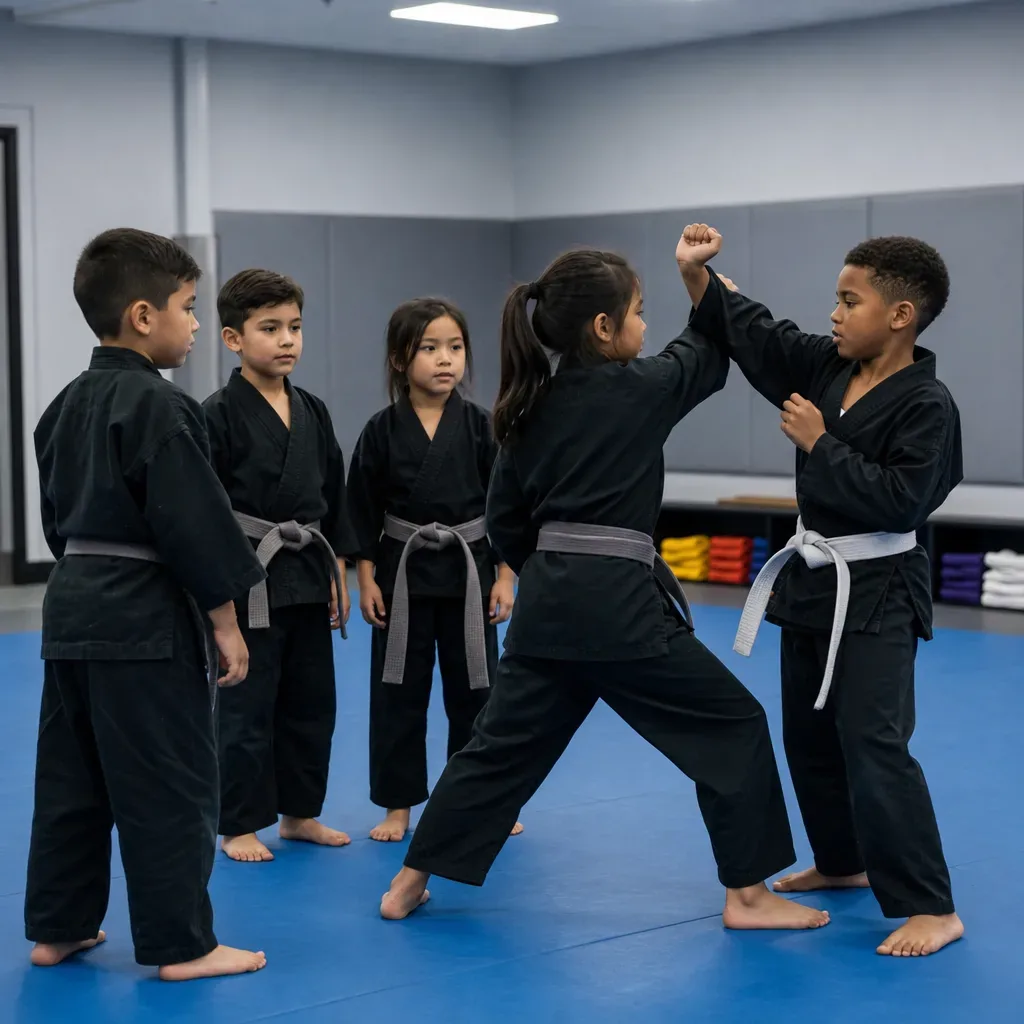
Here's what usually brings families in. A parent notices their child freezing up. Maybe a bigger kid took something at recess, and their child just stood there, eyes down, saying nothing. Or the opposite happens, the child lashes out, swinging first, because nobody taught them the step before swinging. Both kids are ready. They're showing you the exact skill gap self-defense training closes.
Other signals are quieter. A child who shrinks when a stranger says hello. A kid who won't try anything new because failing in front of people feels unbearable. A student who's fine at home and invisible at school. None of that means something's wrong with your child, it means they haven't been given a structured place to practice being brave. That practice is the whole point.
Some parents wait for their child to ask. Most children never will. Kids don't request discipline; they respond to it once it's offered with warmth and consistency.
Our 4-step method starts with Assess for exactly this reason. We watch a new student for one class and meet them where they are. Not where a curriculum chart says a seven-year-old should be. That assessment is free to you, and it tells us more than any form ever could.
If you're reading this and picturing your child, that's usually the sign.
Practical Self-Defense Versus Sport Competition Training
Walk into some schools, and the first thing you see is a trophy wall. Impressive, sure. But a trophy doesn't tell you whether a nine-year-old can break a wrist grab in a crowded hallway.
Sport competition training teaches kids to score points. Rules, weight classes, referees, mats, and a start whistle. Every one of those things is missing in real life. A kid who freezes because nobody said go trained for the wrong situation, and we've watched that happen to students who came to us from tournament programs.
Kajukenbo and Kosho-Ryu Kenpo were never built for points. They were built for real-world defense. Sigung Darryl James trained under Sr. Grand Master Tony Bowles, and that 36-year teaching lineage runs straight through every kids' class we teach.
So what does practical look like on the mat?
- Escapes first. Wrist grabs, bear hugs, shirt grabs, being pulled toward a car. Getting free beats winning every time.
- Voice before hands. Kids drill yelling no and running to a trusted adult. That's the skill they'll use most.
- Awkward positions. Seated at a desk, on the ground, back against a wall, a bag in one hand.
- Pressure without panic. Our 4-step method assesses where a child is, then builds and challenges at their pace.
- Boundaries with people they know. Most situations a child faces involve someone familiar, not a stranger in a mask.
Parents comparing self-defense classes in El Cajon should ask one question at every school: what happens in class when the scenario isn't clean? A good answer sounds specific. A vague one usually means the curriculum stops at kata and sparring.
Trophies are fine. They just aren't the point.
When a Child May Not Need Formal Self-Defense Yet
Let's be honest about this one. Not every kid who walks through our door needs Kids Self-Defense right now. Some parents come in worried after one bad afternoon at the park, and one bad afternoon isn't a pattern. It's a bad afternoon.
If your child is three or four and still learning to follow a two-step direction, formal technique isn't the fix. At that age, the real work is listening, holding still for ten seconds, keeping hands to themselves. You can build that at home. Read together. Practice waiting. Give them jobs they have to finish. A preschooler who can't yet track a simple instruction will spend a class frustrated, and frustration teaches the wrong lesson.
Same goes for a one-time conflict with a neighbor kid. Talk it through first.
There's another case we see, and it's the harder one. When a child is being targeted at school by name, repeatedly, that's a school safety issue before it's a training issue. California public schools are required to have a process for reporting and responding to bullying. Use it. Document what happened, ask for it in writing, follow up. Training builds your child's confidence over months. A documented report can change their Monday.
And if a child is dealing with something deeper, anxiety that stops them from sleeping, or a fear that came from something real, the right first call may be a counselor, not a school like ours. We'd rather you get that right.
Here's what we'll say plainly. Training helps most when it's steady, not urgent. If you're signing up because you're scared this week, wait a week and see if you still want it. Nine times out of ten the families who last three years and more are the ones who started calm.
What a First Self-Defense Class Looks Like
Most parents walk in holding their breath. They're picturing their kid getting hit. That's not what happens. A first Kids Self-Defense class is mostly listening, moving, and learning where to stand. We meet your child where they are, then build from there.
Here's how a first class usually runs:
- A short greeting and bow-in. Your child learns the mat has rules before they learn anything else.
- Warm-up and body control. Balance, footwork, stopping on command. Sounds simple. It's the whole foundation.
- One or two practical skills. Usually stance, distance, and a loud verbal "no" or "back up."
- Partner or instructor drill at a slow pace. Nobody spars on day one.
- Bow out and a word with you about what we saw.
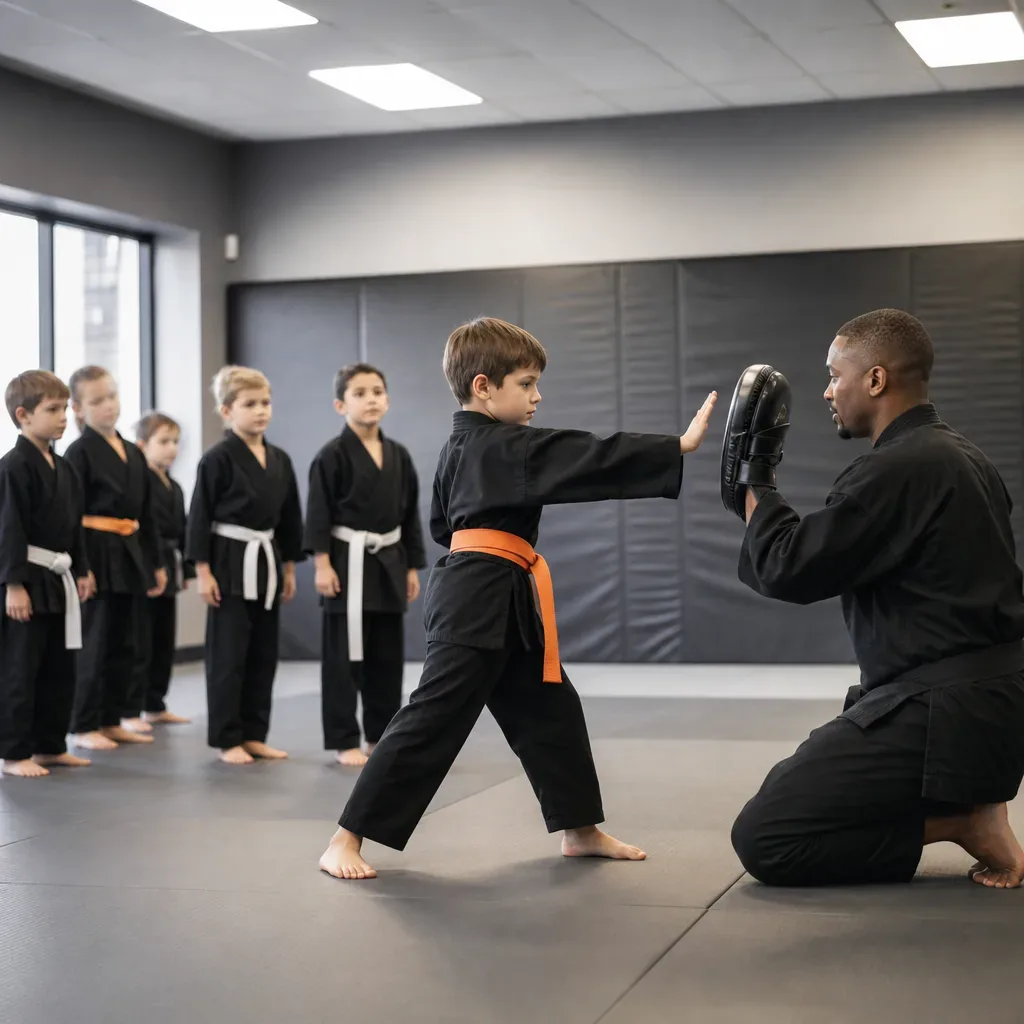
That last step matters more than parents expect. We tell you what your child did well and where they'll need time. No sales pitch. Just what we observed.
We don't call out shy kids. Loud kids don't get shut down. Our 4-step method starts with Assess for a reason: every child arrives with a different baseline, and pretending otherwise wastes their time. A quiet seven-year-old and a bouncing seven-year-old need different first days.
What should they wear? Comfortable clothes and bare feet. No uniform needed the first time.
And parents stay. You sit and watch the whole thing. We've had families from El Cajon, Santee, and Rancho San Diego sit through that first class with their arms crossed and walk out asking about the schedule. Nine times out of ten, the child is the one asking to come back.
Anti-Bullying Skills Versus Physical Self-Defense
Most parents come to us picturing a punch. What their child needs first is a voice.
Bullying almost never starts with hands. It starts with a test. A kid gets singled out, watched, and verbally poked to see how he reacts. If he shrinks, the testing continues. If he stands up straight, makes eye contact, and speaks firmly, the bully usually moves on to an easier target. That's not theory. That's what we watch happen on the mat every week when we run the drills.
So, we teach the verbal layer first, and we drill it like it's a technique. Because it is one.
- Loud, clear voice: "Stop. Back up." Practiced until it doesn't feel weird to say.
- Posture and eye contact, shoulders back, chin level, hands ready but open.
- Reading the room: spotting the setup before it becomes a problem.
- Walking away without looking defeated. That's a skill, not a surrender.
- Telling an adult, and telling the right adult, with specifics.
Now the physical side. Kids do need it, but it sits at the bottom of the stack, not the top. What we train is protective: block, create space, get to safety, get to an adult. Not brawling. A child who understands he could defend himself carries that quietly, and it changes how he walks into a room. He almost never has to use it. That's the whole point.
Our Kajukenbo and Kosho-Ryu training includes real strikes, but a seven-year-old's version is about control and distance. Discipline first. Force last.
Will this make my kid more aggressive? Parents ask us that constantly. The answer is no, and here's why: a child who knows what a real strike is treats it seriously. The kids who swing wildly are the ones who've never been taught the weight of it. Ready to see it firsthand? Book a free trial at our self-defense school in El Cajon.